
Charting a Path Beyond Nuclear Weapons
Authors: Paul Slovic, Emiliano Rodriguez Nuesch, María Morena Vicente.
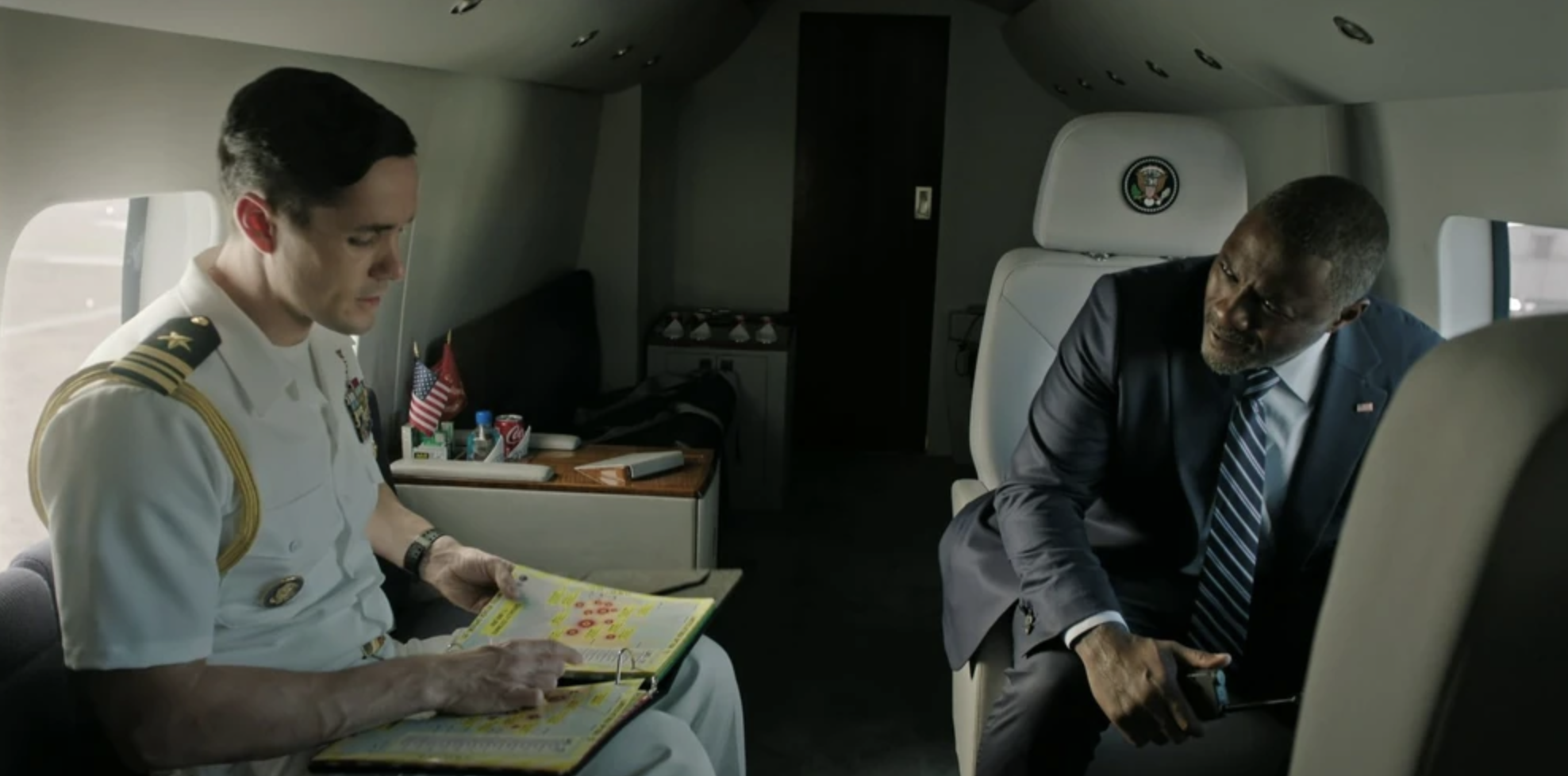
In one of the most unsettling scenes of A House of Dynamite, the president is handed a small card with a few stark options for responding to a nuclear attack that pose catastrophic consequences that he has never been taught to comprehend and weigh carefully. There are only minutes to decide.
The scene is terrifying not only because of what is at stake and the lack of preplanning, but because of how thedecision is framed: a narrow menu of actions, presented under extreme pressure, where retaliation is assumed and restraint is barely visible. Watching it, you can’t help but wonder whether this is how we want the most consequential decision imaginable to be made.
What the film captures powerfully is something decision scientists have been warning us about.
When people are asked to make nuclear decisions, their choices are strongly shaped by the options they are shown. When a “no launch” option is explicit, many people choose it; when it is absent, most select some form of retaliation—even if they are deeply uneasy about it.
Preferences, in other words, are not fixed; they are constructed in the moment. If this is true for ordinary citizens in an experiment, it should give us pause about leaders forced to decide in minutes, with lives, cities, and the future hanging in the balance.

Eros Hoagland/NETFLIX
What follows from recent research is unsettling but also actionable: if nuclear preferences are constructed in the moment—under time pressure and narrow menus—then reducing nuclear risk requires changing the procedures that construct those preferences in dangerous ways.
First, redesign decision materials so restraint is not invisible. Put “do not launch”, “pause and verify” on the same page, in the same format, as strike options—alongside credible non-nuclear response paths and de-escalatory signaling options.
Second, build safeguards for predictable psychological problems: psychic numbing as casualties scale, tunnel vision induced by fear and time pressure, and the pull of righteous punishment. Independent challenges, structured checklists, and deliberate “friction” to allow time for slow, reasoned deliberation, can help keep catastrophe from becoming the default.Train in advance for how to comprehend and make tradeoffs between the enormous consequences at stake.
But procedures are not enough. The “menu card” sits in a wider system where arms-control guardrails are weakening and AI-enabled deception can outrun verification—precisely the conditions that magnify human cognitive vulnerabilities in crisis.
This is why the agenda must also include restoring and strengthening arms control, crisis communications, and verifiable constraints. And it must confront an uncomfortable conclusion: if nuclear weapons remain, they will eventually be used. Between AI deceptions and the deceptions of our own minds, nuclear wars may be inevitable unless we eliminate the weapons themselves.
Charting a Path Beyond Nuclear Weapons (Slovic, 2026) argues that risk reduction and abolition are not separate projects but steps on the same path: reduce the likelihood of use now, while working, however difficult, for a world without these weapons.
To request essays and articles on decision analysis, choice architecture, psychic numbing, “virtuous violence,” arms control, and the case for abolition, write to arithmeticofcompassion@gmail.com
Available Readings
● Keeney, R.L., Gregory, R., and Slovic, P. (2025). Proactively planning for possible future crises. Decision Analysis.
● Slovic, P., & Lin, H. S. (2020). The caveman and the bomb in the digital age. In H. A. Trinkunas, H. S. Lin, & B. Loehrke (Eds.), Three Tweets to Midnight: Effects of the Global Information Ecosystem on the Risk of Nuclear Conflict (pp. 39–62). Hoover
Institution Press.
● Slovic, P., Mertz, C. K., Markowitz, D. M., Quist, A., & Västfjäll, D. (2020). Virtuous violence from the war room to death row. Proceedings of the National Academy of
Sciences.
● Weiner, S. K., Slovic, P., Kause, A., Post, D., & Kütt, M. (Manuscript). Choosing to use nuclear weapons: How choice sets affect decisions in a nuclear crisis.
● Slovic, P. (January 2026). Charting a Path Beyond Nuclear Weapons: Confronting Geopolitical Crisis, Technological Risk, and Cognitive Vulnerability: A Report on the Imperative for Nuclear Abolition.
● Slovic, P., Peterson, M., McDermott, R., Post, D. R., & Västfjäll, D. (in press). When Our Minds Go Nuclear: Rethinking Nuclear Strategy and Policy Through the Psychology of Risk and Decision Making. Texas National Security Review.