
When Political Claims Enter the Pitch
By María Morena Vicente and Emiliano Rodríguez Nuesch
Argentina's 2–1 World Cup semifinal victory over England was followed by a celebration that quickly became part of the post-match conversation.
After the final whistle, several Argentine players displayed a banner reading "Las Malvinas son Argentinas" ("The Malvinas are Argentinian"), referring to the islands known in the United Kingdom as the Falklands. According to The Guardian, Lisandro Martínez and Giovani Lo Celso held the banner while celebrating with supporters after Argentina secured a place in the World Cup final.
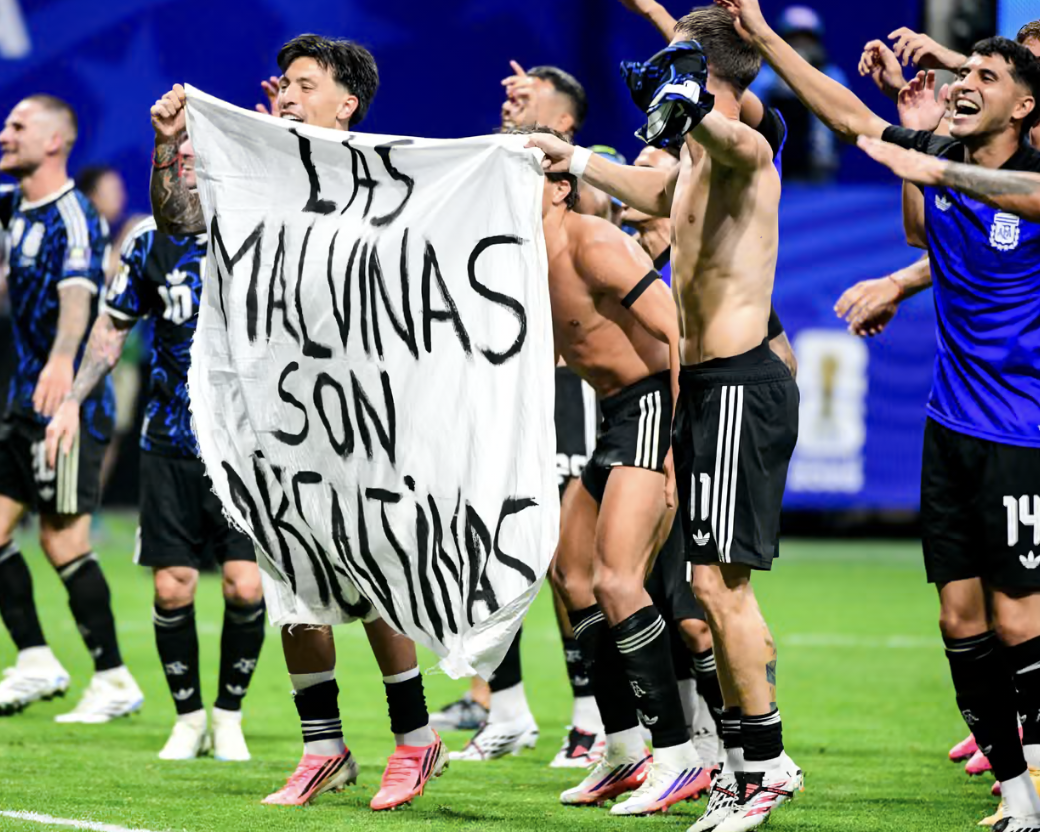
Argentina players hold up a banner proclaiming ‘Las Malvinas son Argentinas’ after the Fifa World Cup semi-final against England on 15 July 2026. Photograph: MB Media/Getty Images.
The display revived one of the world's longest-running territorial disputes. Argentina continues to claim sovereignty over the islands, while the United Kingdom has administered them since 1833. The dispute led to the 1982 Falklands/Malvinas War, in which more than 900 people died.
The banner also raised questions about FIFA's rules. The organization's stadium code of conduct prohibits "banners, flags, flyers, apparel and other paraphernalia that are of a political, offensive, and/or discriminatory nature." UK Business Secretary Peter Kyle called the display "entirely inappropriate" and said he expected FIFA to investigate.
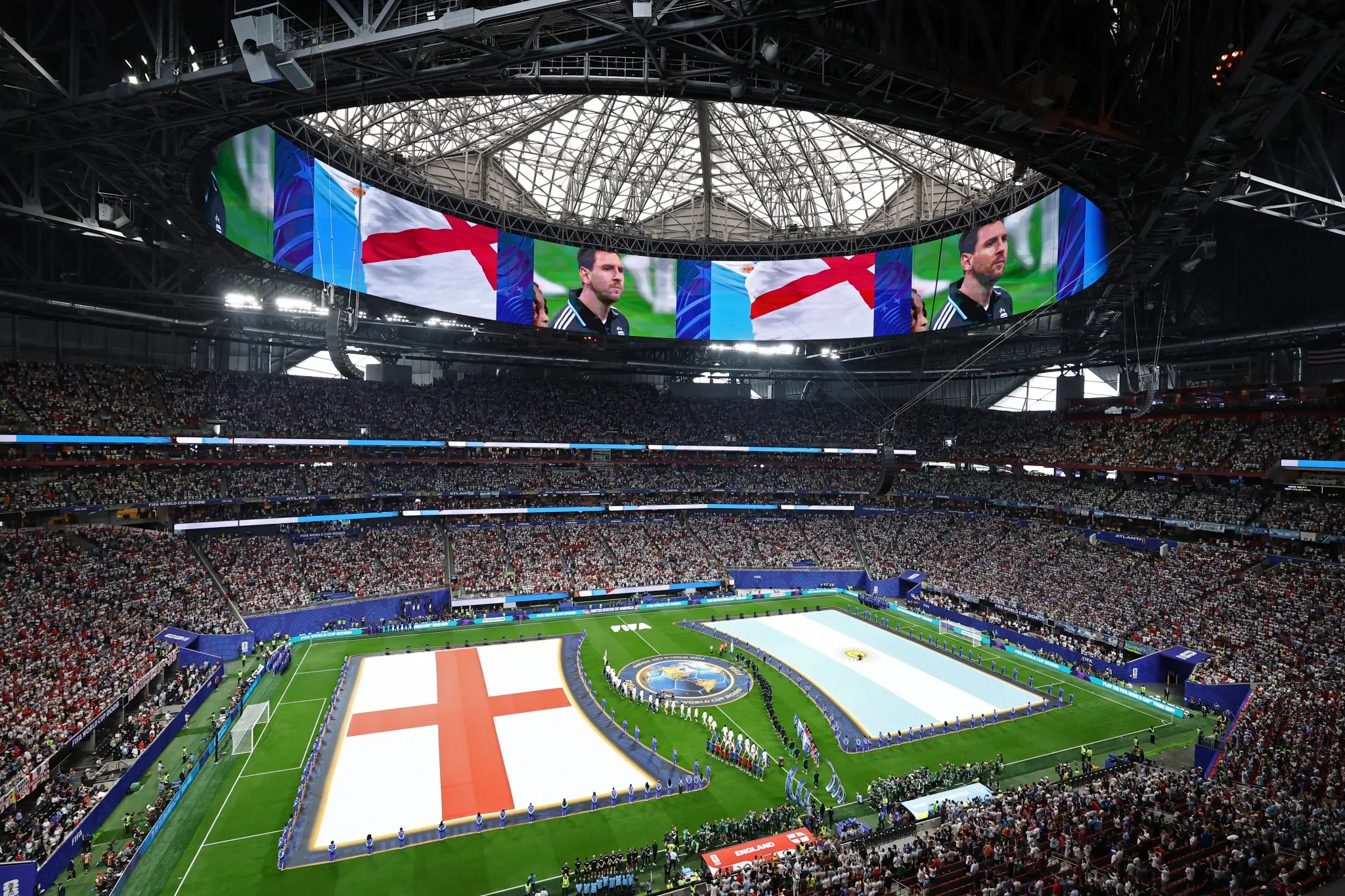
Credit: Reuters.
Argentine players defended the gesture. Martínez told reporters: "I can picture a Malvinas veteran seeing that and weeping." Teammate Leandro Paredes added that the islands remain "a sad part of our history" and said the team felt they were playing "for them, too."
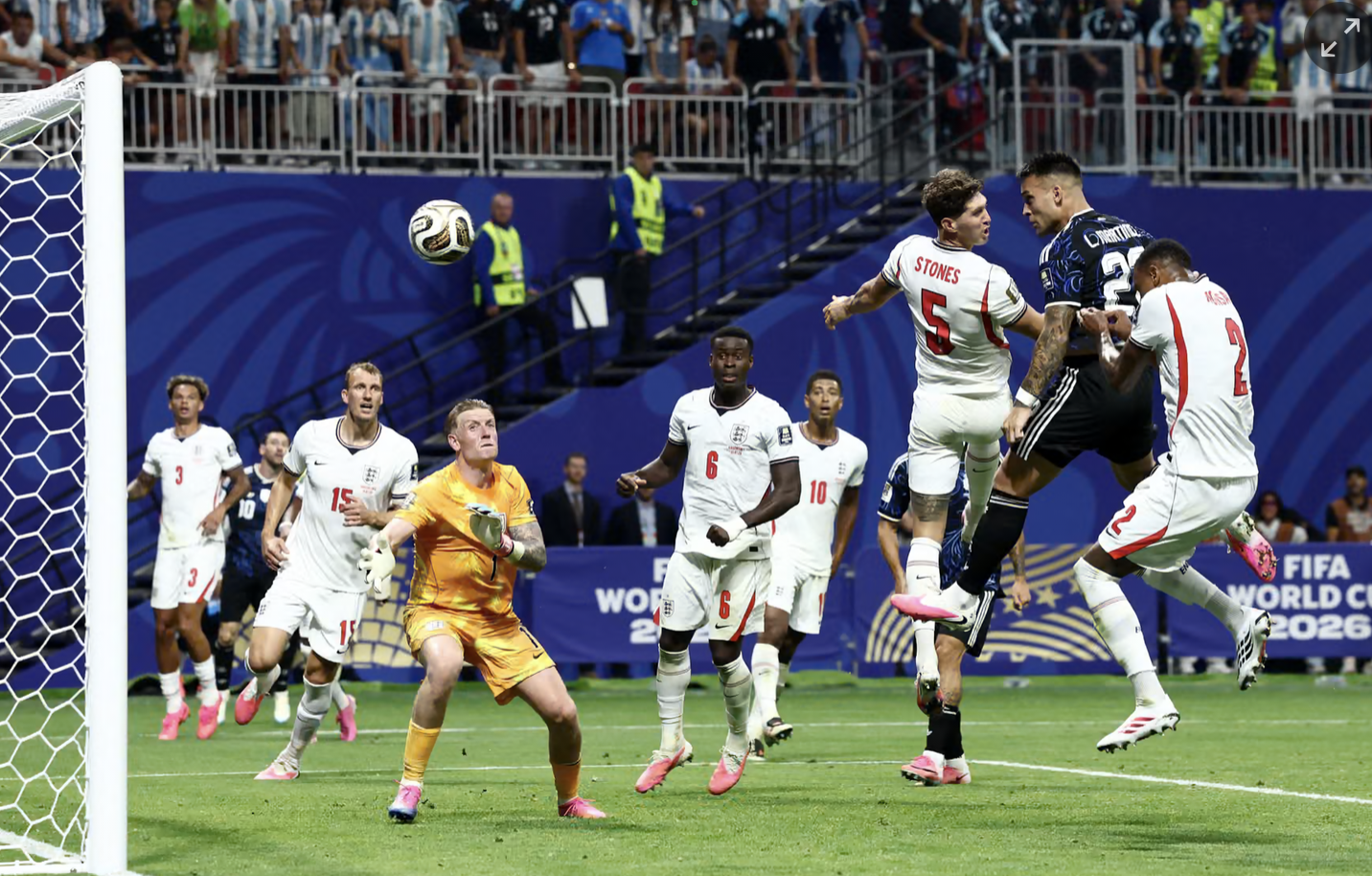
Lautaro Martínez climbs high to nod home Argentina’s late winnerPhotograph: Amanda Perobelli/Reuters.
The episode is another example of how international sporting events can become a platform for political or territorial messages. During this World Cup, The Guardian noted that Iranian-American fans displayed pre-revolutionary Iranian flags during Iran's matches. Previous tournaments have also seen disputes involving Kosovo and Serbia, Palestinian flags, and debates over rainbow armbands supporting LGBTQ+ rights. In England, football has long carried historical references as well.
Chants such as "Ten German Bombers" and "Two World Wars and One World Cup," both referencing World War II, have been sung by some England supporters for decades and have repeatedly been criticized within the UK.
FIFA has long maintained that politics should remain separate from football. Yet when national teams compete, moments of sporting success can also become opportunities to express broader national claims. Argentina's celebration following its victory over England is the latest example of that tension.