
When the Threat Is Sacred: Understanding Crocodile Risk in Timor-Leste
By María Morena Vicente and Emiliano Rodríguez Nuesch
When people think about danger in coastal communities, they imagine tsunamis or storms. But in Timor-Leste, researchers found something different: the risk people face most often is crocodile attacks. Since 2007, the country has recorded at least 173 attacks, 78 of them fatal — and experts believe the real number is higher because many cases are never reported.
The challenge is not just biological. It is cultural.
Across Timor-Leste, crocodiles are not seen as pests or predators. They are sacred beings, tied to creation stories and ancestral belief systems. In many communities, crocodiles are treated as protectors — even family. Killing one is taboo.
That makes risk communication complicated.
How do you warn people about a danger they believe is part of who they are?
A Rising Risk — and a Growing Silence
Multiple studies confirm the scale of the problem. A 2024 Oryx paper documented a 23-fold increase in reported attacks over seven years. Reports from the IUCN Crocodile Specialist Group show that in south-coast villages, one in three recorded attacks are fatal.
Yet communities rarely retaliate. In some cases, they don’t even report attacks.
Why?
Researchers highlight a key barrier: belief systems anchored in lulik, the sacred order that governs respect, taboos, and relationships between humans and the natural world. Within this worldview:
Crocodiles can be ancestors.
Attacks may be interpreted as spiritual punishment.
Killing a crocodile can bring misfortune to the entire community.
This creates a psychological bind: the threat is real, but confronting it violates something deeper.
When Reverence Meets Risk
For scientists and conservationists, this presents a unique challenge. Crocodiles must be protected — they are a vulnerable species — yet people must be protected too. Timorese leaders, researchers, and the IUCN now advocate for culturally conscious risk reduction, including:
Community-led monitoring instead of lethal control
Education that aligns with traditional beliefs
Mapping hotspots where attacks are most likely
Infrastructure changes (safe crossings, barriers, warning systems)
These strategies work better because they respect the core truth: for many Timorese, crocodiles are not “animals,” they are relatives.
The Psychological Barrier: When the Threat Has a Name
In this blog, we often write about psychological barriers that shape our response to risk — psychic numbing, the prominence effect, emotional distance. In Timor-Leste, the barrier is different: moral closeness.
When a threat is sacred, the mind resists framing it as danger.
People hesitate to act, hesitate to speak, hesitate to warn.
The result is predictable: underreporting, preventable deaths, and limited public conversation.
This is not just a conservation problem. It is a human behavior problem — and a reminder that risk communication must match the cultural reality of the communities we expect to respond.
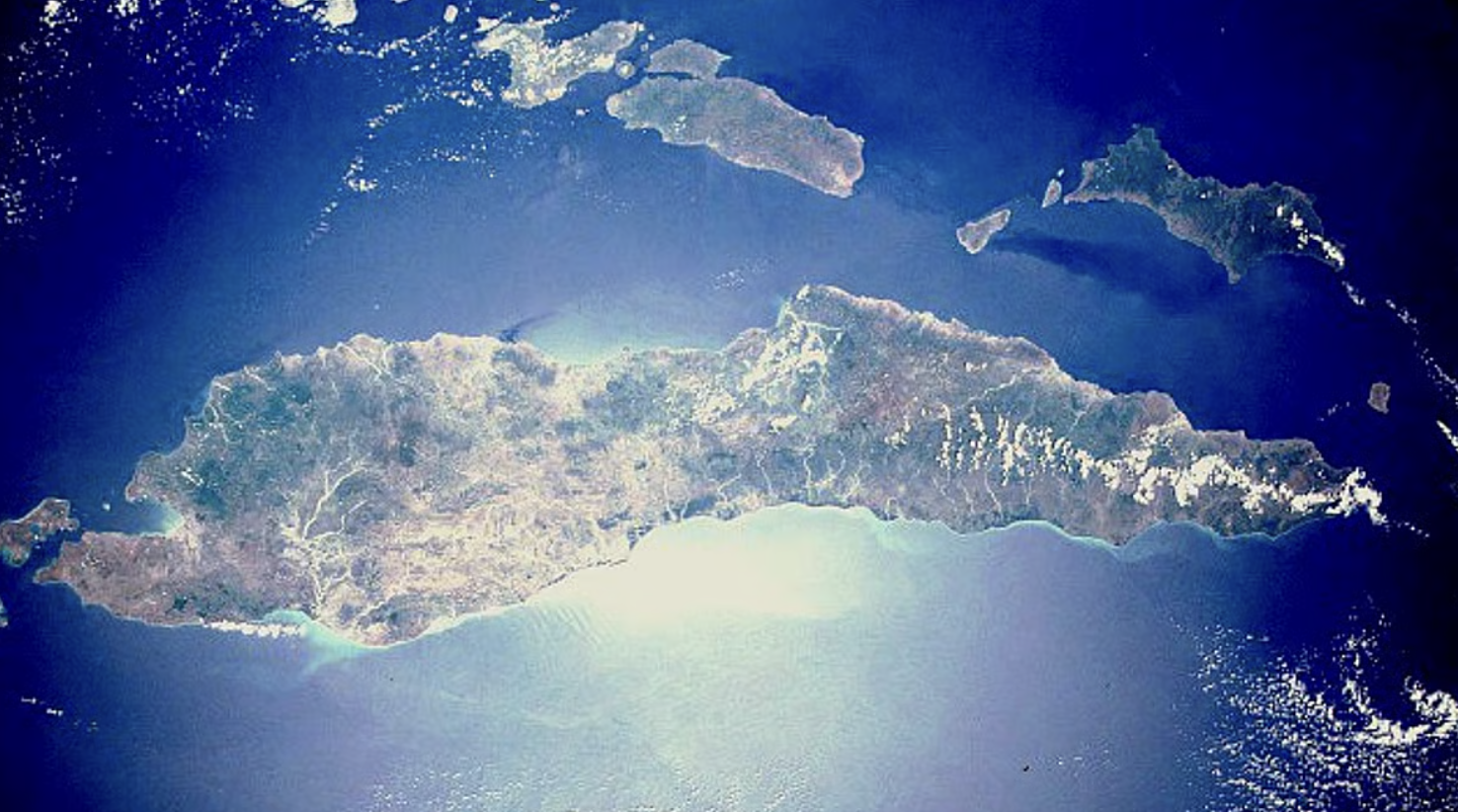
To some, the island of Timor itself resembles a saltwater crocodile, with the eastern part resembling the head and the western part resembling the tail. Photo courtesy: NASA.