
Women-Led Radio Stations: Where silence begins to break
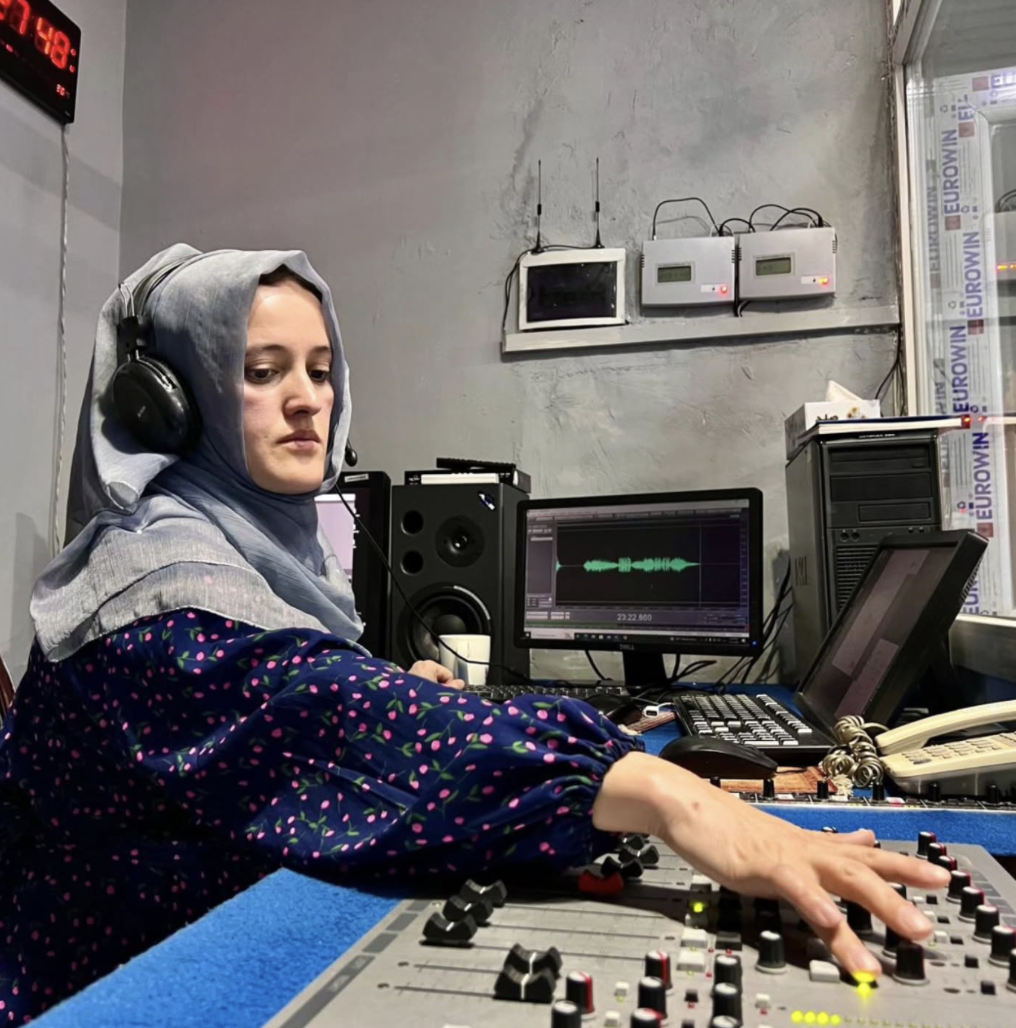
On 8 March 2021, a radio station began broadcasting in Kabul. It was called Radio Begum, run by women, for women, and launched with a clear sense of timing. “I decided to launch this radio station… to be ready for the day the Taliban takes power,” its founder, Hamida Aman, said.
Five months later, the Taliban returned. Restrictions followed quickly: on education, movement, and public presence. In many ways, the space for women narrowed to the point of disappearance. The station stayed on air.
It adapted. It does not broadcast politics. Instead, it focuses on health, religion and education—subjects that remain permissible, if carefully framed. “They banned schools, but not education,” Aman said.
The station operates within constraints, but not entirely inside them. “There is no more public space for women, and it's kind of a public space,” Aman said.
Listeners can call in. They speak to doctors, psychologists, and religious advisers. They ask questions they may not be able to ask elsewhere. But the effect is not only informational. “It provides them with an opportunity to listen to other women… to listen to the way they talk,” said Saba Chaman.
Ph: Begum Organization for Women.
This is a quieter kind of change. People do not just learn something new; they hear how someone like them speaks, questions, hesitates. Over time, calls multiply. Stories repeat. Experiences that felt isolated begin to look shared. “Each broadcast chips away at a culture of silence.”
Radio might seem like an unlikely medium now. But its properties are specific. It is cheap and it works without the internet. It is local and leaves no trace. A listener can tune in privately and simply switch it off. “You could call in… share something so intimate,” said media professor Monica De La Torre.
The changes are often incremental. A woman hears that her experience is not unique. Another realises that what she accepted may be questioned. In some cases, the consequences are concrete. One listener, after hearing a programme, sought legal support and left an abusive marriage. Others brought family members to mental health services. “It’s changing behavior,” said journalist Lina Chawaf.
In 2025, Taliban officials raided the station, confiscating equipment and detaining staff. It was shut down. It returned to the air weeks later. “Despite all these challenges, we continue our activities,” Aman said.
It is tempting to describe this in large terms: empowerment, transformation, systemic change. The reality is quieter. A voice is heard. Another voice responds. In places where speaking carries risk, even that is not guaranteed. But repeated over time, it appears to be enough to suggest that change may begin with something simple: the possibility of hearing, and being heard.
Based on reporting from Empowering Airwaves: Women-Led Radio Stations Amplify Unheard Voices, by Gabe Bullard.