
Former Enemies, Shared Memories
By Emiliano Rodríguez Nuesch and María Morena Vicente
Wars are often remembered through countries, dates, battles, and political decisions.
But wars are also lived by individuals.
That is what makes Minefield, the documentary theatre project created by Lola Arias, so powerful. It reunites Argentine and British veterans of the Falklands/Malvinas War to explore what remains of the conflict in their memories, their bodies, and their lives more than three decades later.
The men who once faced each other as enemies meet again, this time on a stage.
Rubén Otero had never been on a ship before the war. He did not know how to swim. When the ARA General Belgrano sank, he survived in the freezing South Atlantic on a life raft.
Decades later, he became the drummer of a Beatles tribute band.
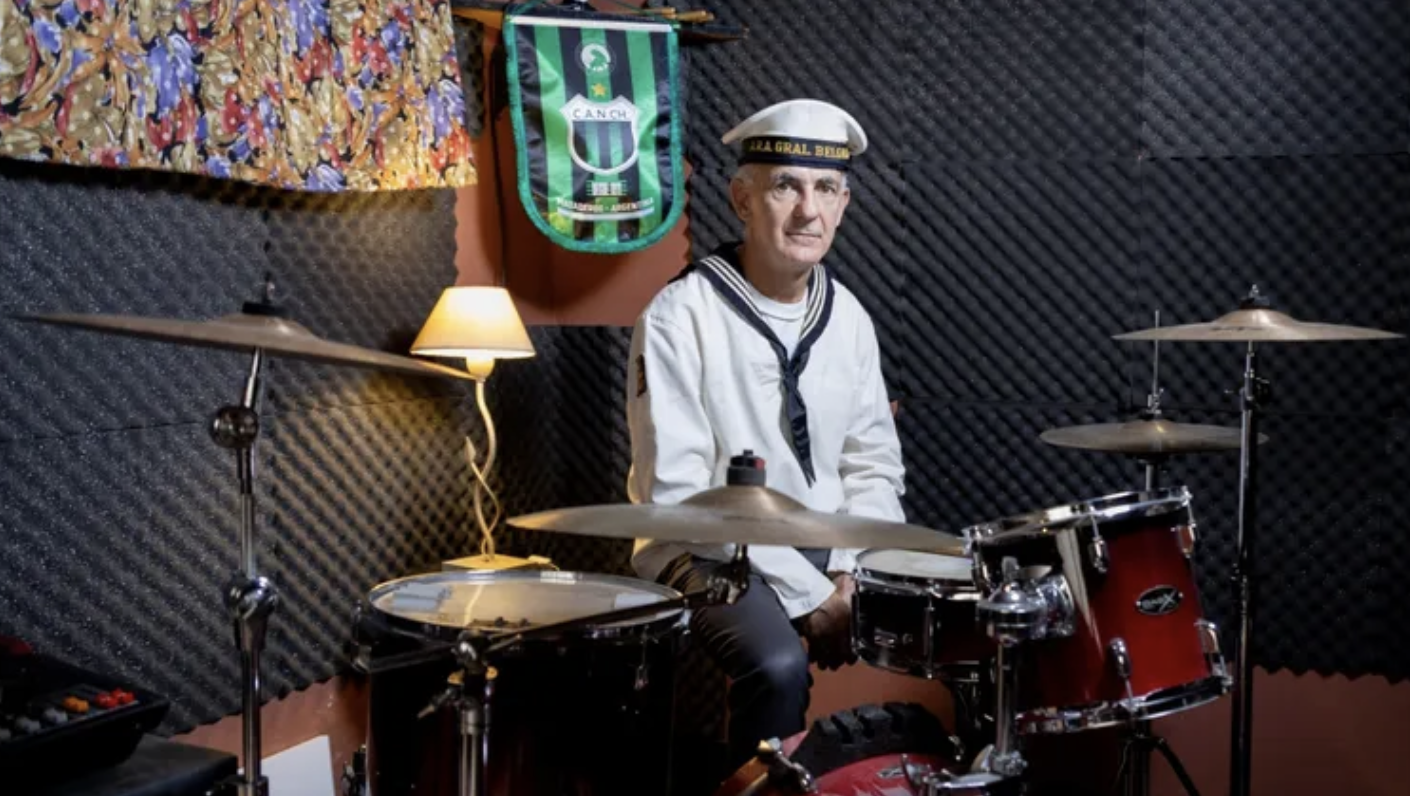
Rubén Otero with his drums. Picture by Camila Alonso
Lou Armour became one of the faces of the war when photographs of him as a British prisoner appeared in newspapers around the world. Today, he works as a teacher for children with special needs.
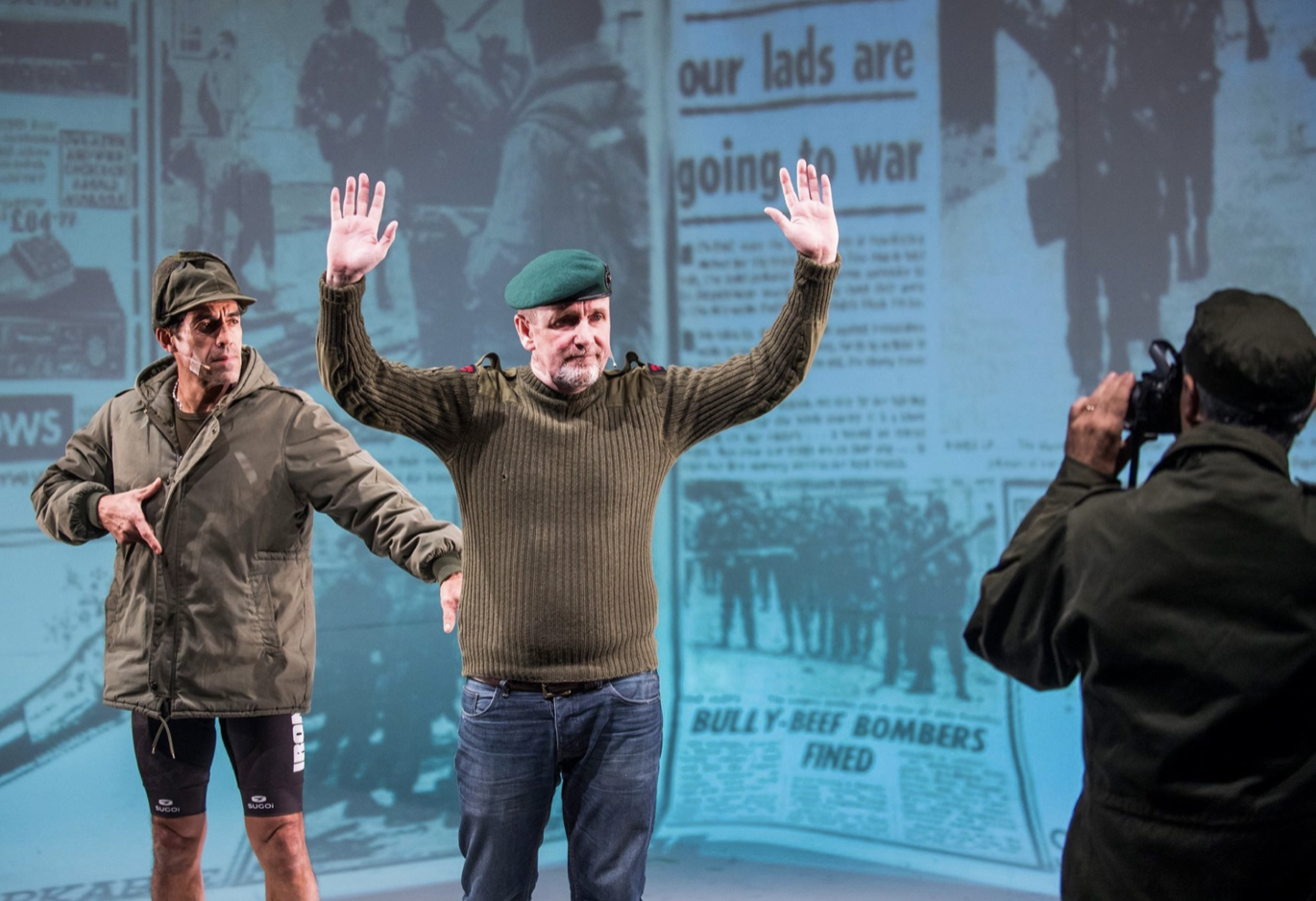
Lou Armour, with his hands in the air, and Marcelo Vallejo in a scene from ‘Minefield’. Picture by Tristram Kenton
David Jackson spent the war listening to and transcribing radio codes. Years later, as a psychologist, he found himself listening to other veterans and their memories of war.
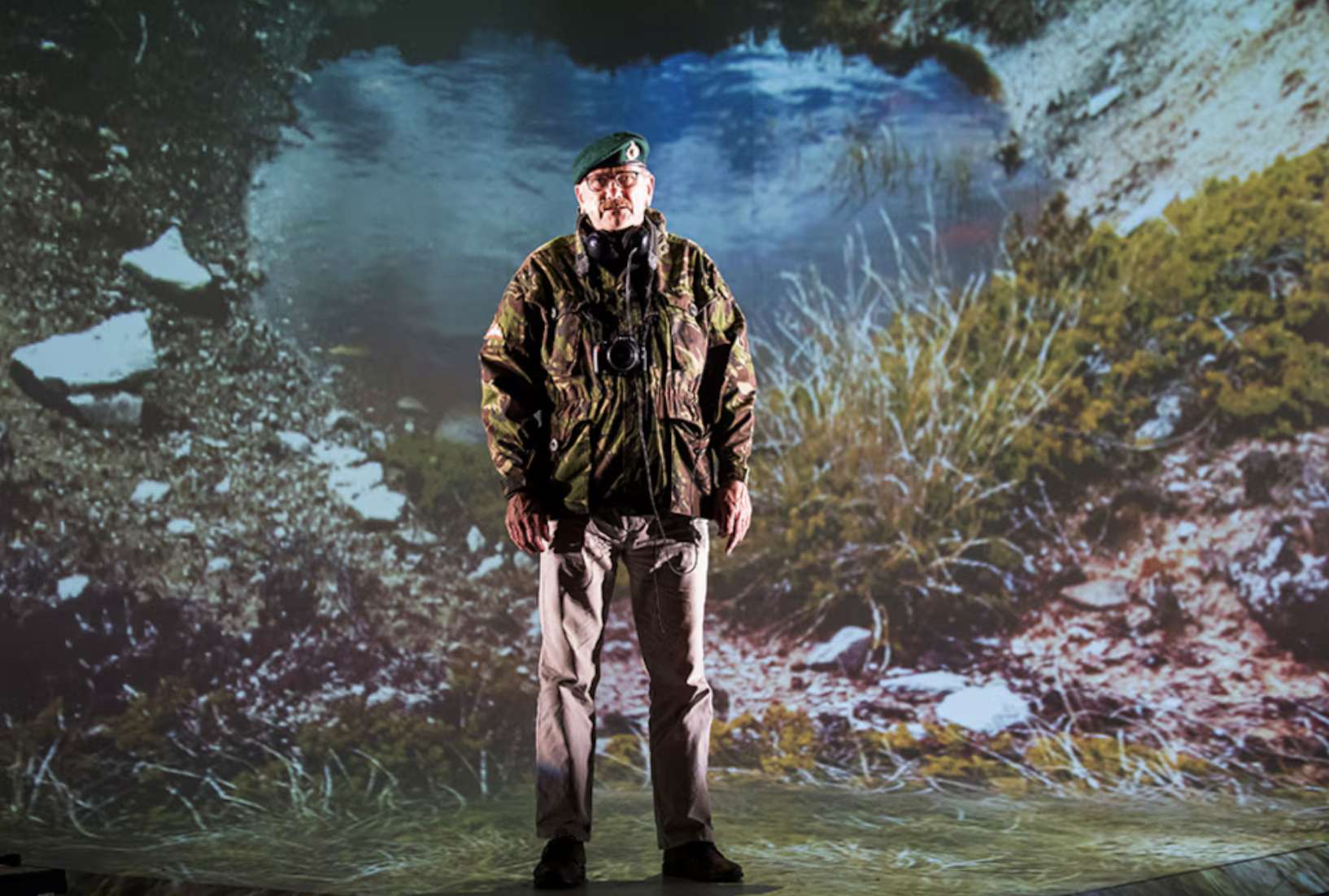
David Jackson in a scene from ‘Minefield’. Source: www.lolaarias.com
Gabriel Sagastume was a soldier who never wanted to shoot. Today, he works as a criminal attorney.
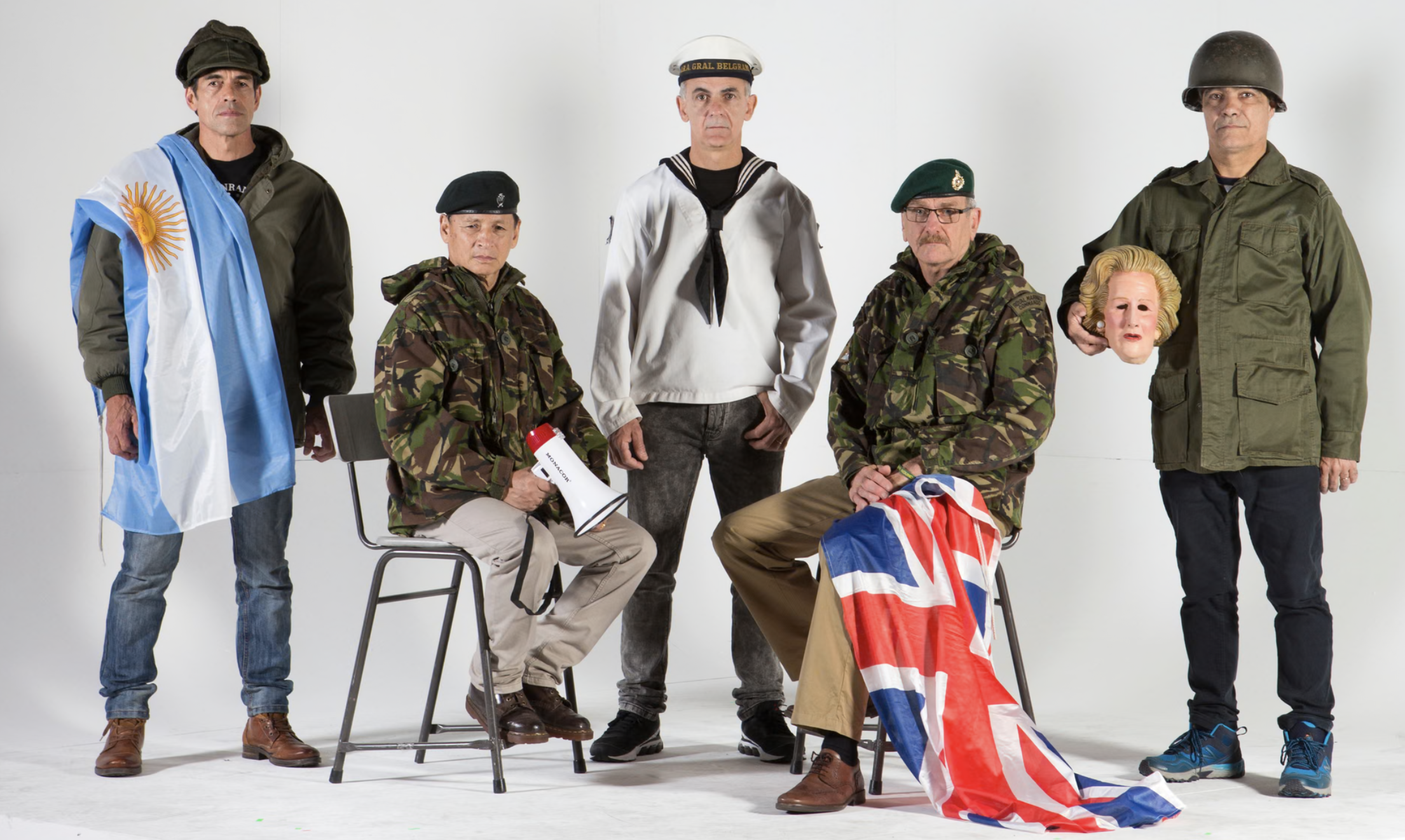
Falklands/Malvinas war veterans Marcelo Vallejo, Sukrim Rai, Ruben Otero, David Jackson and Gabriel Sagastume. Photograph: Richard Saker/The Observer
In Minefield, their stories come together. They reconstruct their memories, revisit the people they used to be, and even perform music together.
Former enemies who once met in war now share a stage, instruments, and a song.
Gabriel entered the project carrying his own ideas about the British veterans. Spending time together changed that.
"The experience was wonderful," he said. "It allowed us to know a side of the war that was unknown to us: their stories, often similar to ours, and their infinite pain despite being the winners."
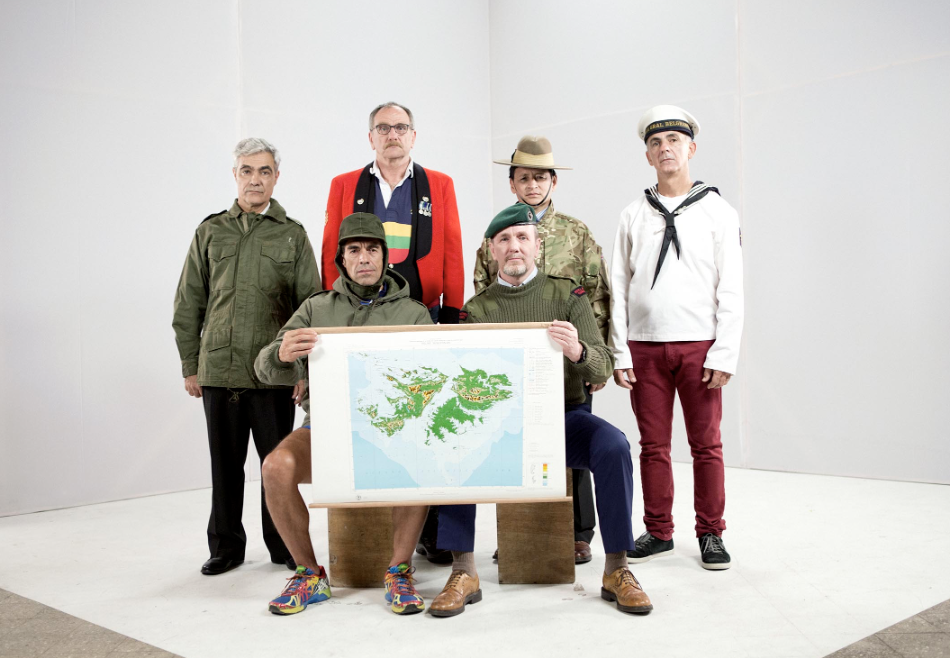
Source: www.lolaarias.com
Lola Arias also began the project wondering how different their experiences would be. Were professional soldiers and young conscripts marked by war in different ways?
What she found was something that crossed those lines.
"No one is prepared for war," she said. "To see a friend die, to die, to kill, whether they are professional soldiers or not."
Minefield does not ask the veterans to agree on history. It does something different: it allows them to share the memories they still carry.
What is a veteran — a survivor, a hero, a victim, a witness?
The answer depends on who is telling the story.
And in Minefield, former enemies tell that story together.