
Marjane Satrapi, the creator of Persepolis, has died at the age of 56
By Emiliano Rodríguez Nuesch
If you've never read Persepolis, this is a good moment to pick it up.
Satrapi tells the story of growing up in Iran during the Islamic Revolution and the Iran-Iraq War through the details of an ordinary childhood. A girl who dreams of becoming a prophet and argues with God. A grandmother whose advice echoes throughout her life. Uncle Anoosh carving a swan from bread in prison. Children playing with their newly mandatory veils before they understand what they represent. Family parties despite the bombings. Punk music, first love, and, eventually, the farewell that sends Marji into exile.
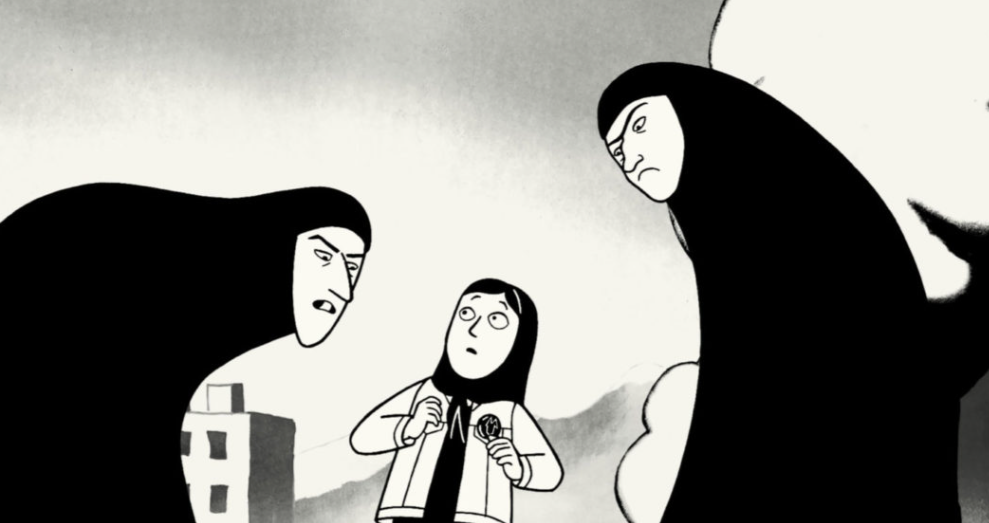
Before the story begins, Satrapi takes a few pages to explain why she wrote the book. She sketches 2,500 years of Iranian history—from the Persian Empire to oil, the 1953 coup, the Shah, and the Islamic Revolution—and then makes a simple point: a country with one of the world's oldest civilizations had come to be known almost exclusively through fundamentalism, fanaticism, and terrorism. Persepolis was her answer to that image.
The drawings are as memorable as the story itself. Thick black lines. Almost no shading. Faces reduced to a few strokes. Yet every page carries warmth, fear, humor, anger, and grief. Few graphic novels have done so much with so little.
In 2007, Satrapi and Vincent Paronnaud adapted Persepolis into an animated film, preserving the graphic novel's distinctive black-and-white aesthetic. The film won the Jury Prize at Cannes and was nominated for the Academy Award for Best Animated Feature, introducing Marji's story to an even wider audience.
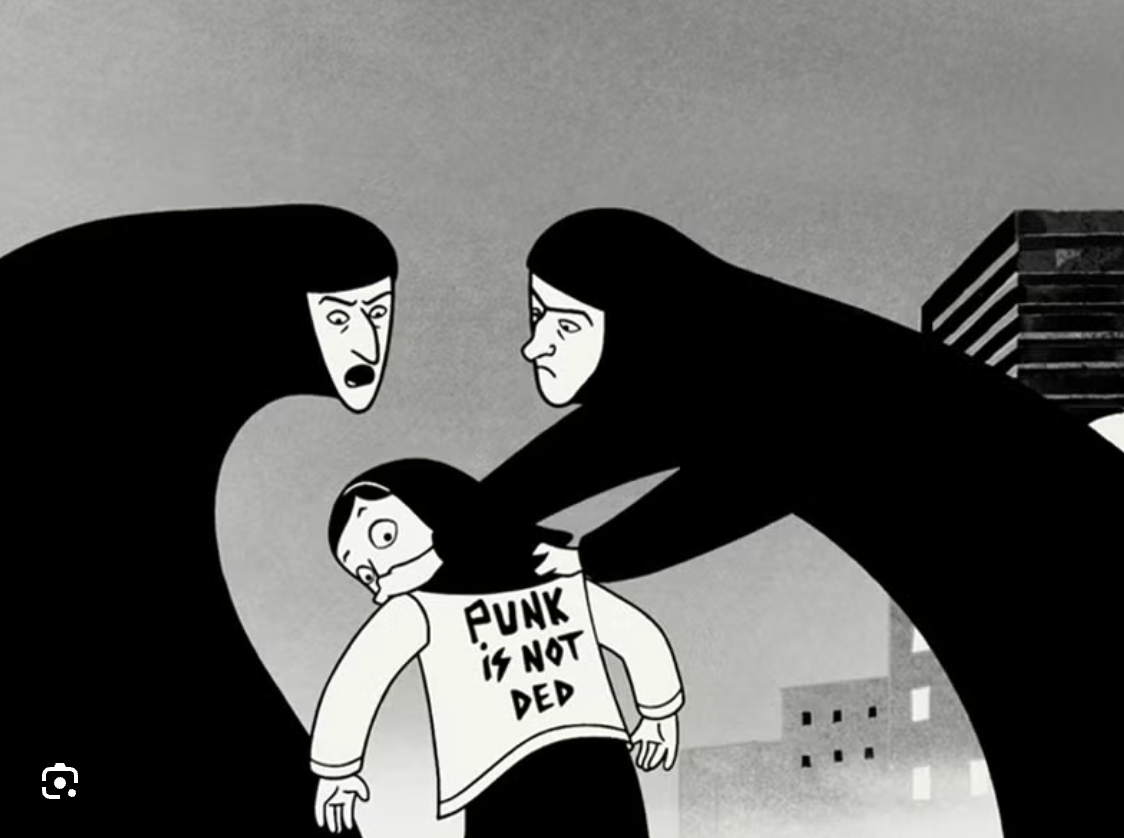
At Arithmetic of Compassion, we often think about how individual stories shape the way we see entire groups of people. For many readers, Persepolis was the first encounter with an Iran that felt personal rather than political—a place of families, humor, contradictions, and ordinary lives.
Thank you, Marjane Satrapi.