
Seeing Ourselves in Strangers
By María Morena Vicente and Emiliano Rodríguez Nuesch
For more than twenty years, photographer François Brunelle has been bringing together people who look strikingly alike — and who share no known family connection. His long-term project, I’m Not a Look-Alike!, began almost accidentally, after noticing two unrelated people who could easily be mistaken for twins. What started as curiosity slowly turned into a systematic exploration of resemblance, chance, and recognition.
Brunelle’s role is deliberately restrained. He does not stage emotions or ask participants to perform. He invites two strangers into the same room, places them side by side, and photographs them as they are. The encounters themselves are often simple and quiet. People look at each other, smile, hesitate, laugh.
Many describe a brief disorientation — a sense of seeing themselves from the outside — followed by ease. Conversations tend to circle around small details: habits, gestures, childhood photos, the odd familiarity of a face that feels known without being known.
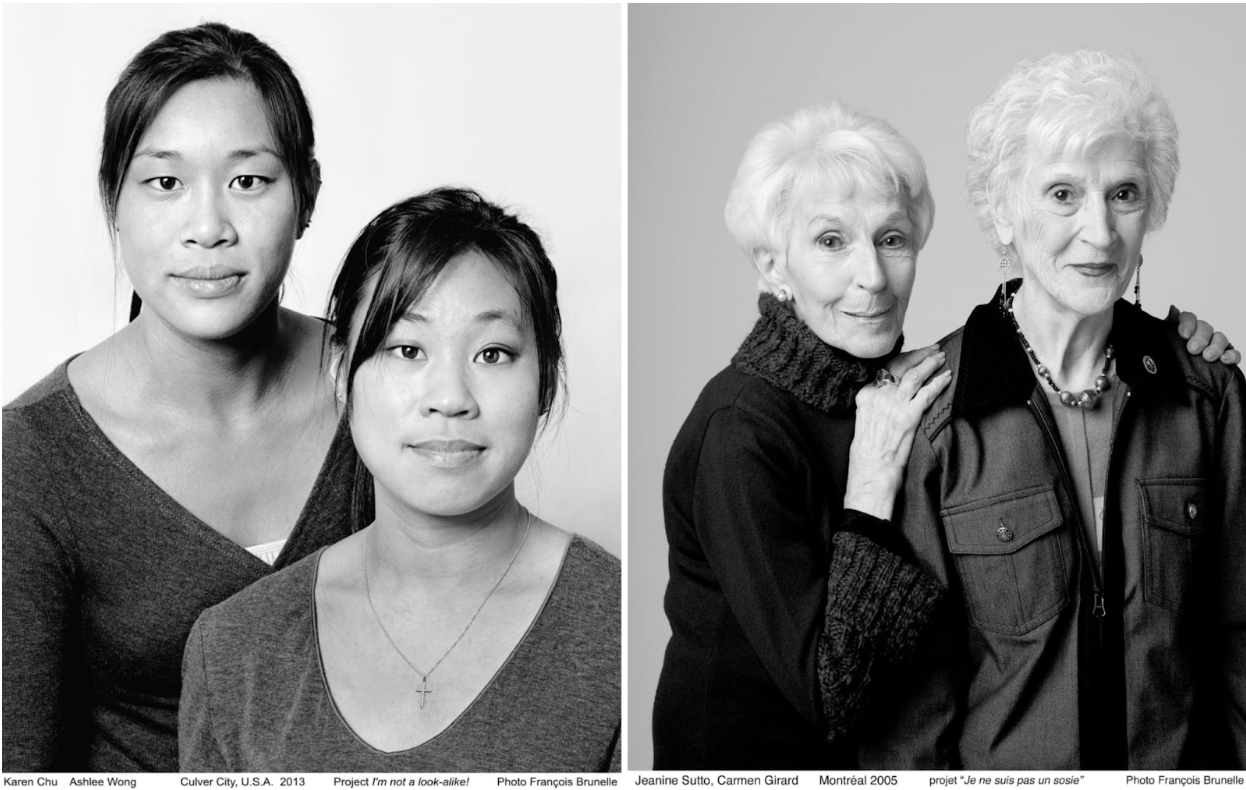
What is striking is who Brunelle finds. His subjects are not celebrities or curated cases, but ordinary people: teachers, retirees, students, workers from different countries and backgrounds. The resemblance cuts across age, class, and geography. The photographs make something visible that is usually abstract: how thin the visual boundary can be between “me” and “someone else.” Identity, the images suggest, is less unique than we assume — and more shared.
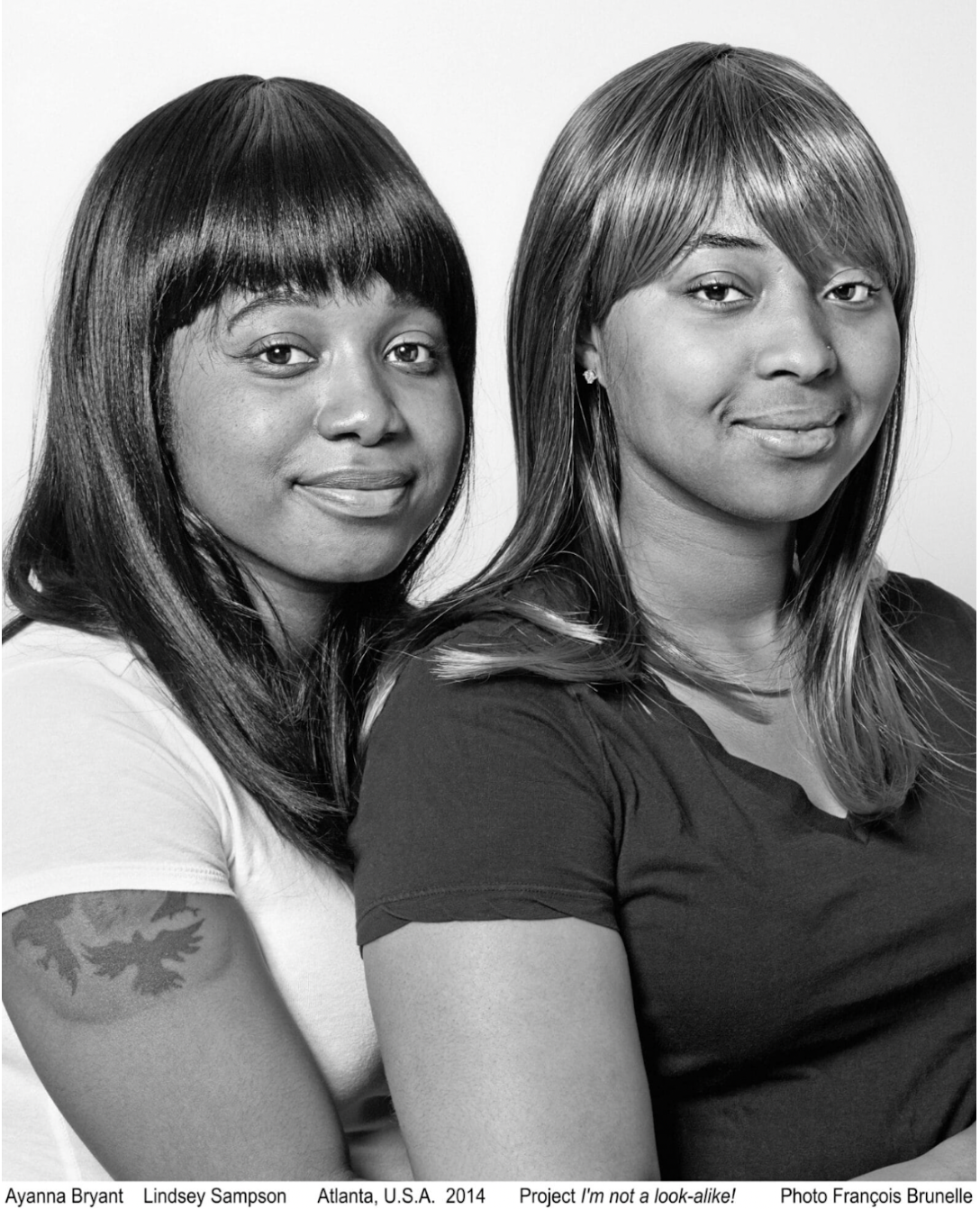
There is an unexpected form of empathy in this work. Not the empathy of shared experience or shared suffering, but the empathy of resemblance. Seeing oneself reflected in a stranger disrupts easy distinctions. It invites a small but meaningful shift: if this person could pass for me, then perhaps the distance between us is smaller than it appears. Brunelle’s photographs do not explain this feeling. They simply allow it to happen.