
When Songs Make Nuclear Risk Feel Real
By Emiliano Rodríguez Nuesch and María Morena Vicente
Some songs try to raise awareness about nuclear risk by doing what statistics often can’t: bringing an overwhelming issue closer.
They touch emotional fibers and help start conversations.
Nuclear risk is a complex, multi-layered issue, but these songs make it tangible.
They highlight human dimensions and reveal our emotions.
2 Minutes to Midnight – Iron Maiden
Named after the Doomsday Clock, it captures how close catastrophe can feel—and how easy it is to get used to that idea.
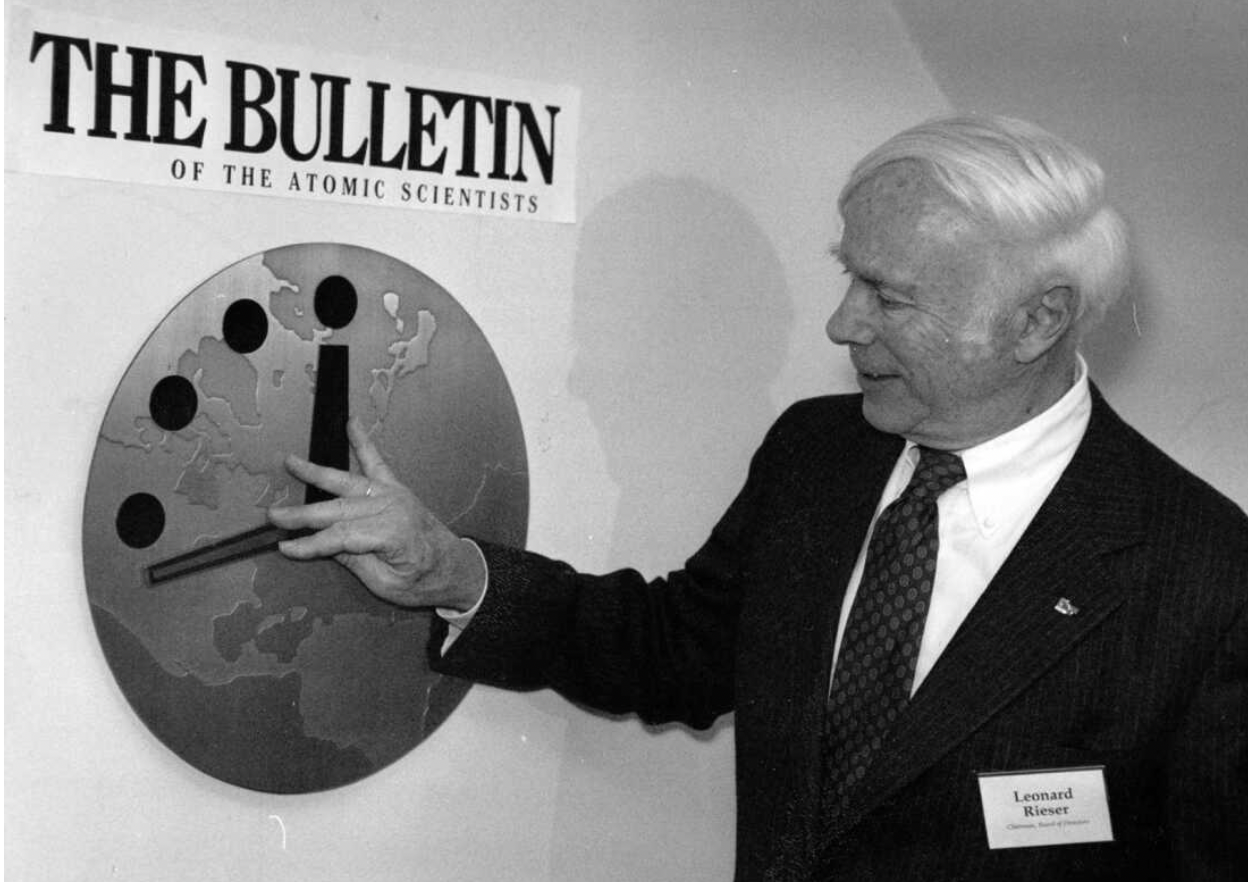
A small detail: “2 minutes to midnight” comes from the Doomsday Clock—a symbolic clock that shows how close humanity is to catastrophe—set at that level in 1953, at one of the Cold War’s most dangerous moments.
The song also takes aim at war profiteering, people making decisions far removed from their real human consequences.
Russians – Sting
“I hope the Russians love their children too.”
That line alone does most of the work. It cuts through politics and reminds you of something obvious… but easy to forget. We’re not that different from each other.
When the war in Ukraine started in 2022, Sting performed it again and said he never thought the song would feel relevant like this anymore.
99 Luftballons – Nena
A few balloons get mistaken for a threat… and everything escalates from there.
How far can misinterpretation go?
The song came out in the 1980s, during Cold War paranoia and protests against U.S. missiles in Europe.
Curious fact: the original German version and the English one don’t tell the story in exactly the same way—the German version leans more into a long, drawn-out war and lost dreams.
Learn more about its story here.
Enola Gay – Orchestral Manoeuvres in the Dark
“Enola Gay” sounds almost technical and neutral.
But it’s the name of the plane that dropped the atomic bomb on Hiroshima.
The song brings you back to the human side of that decision.
Lines like “It’s 8:15” refer to the exact moment the bomb exploded and the time froze on clocks across the city.
These songs all point to the same thing: nuclear risk goes beyond weapons or strategy.
It’s about how we perceive situations, how we interpret signals, and how easily things can escalate.
And sometimes, what makes that real isn’t more data, but something that makes you feel it.