
Betting on War
War used to be something people feared, protested, reported on, or suffered through.
Now it is also something people can bet on.
That is the disturbing shift behind the rise of prediction markets like Polymarket and Kalshi. These platforms let users wager on real-world events. In theory, they are about forecasting. In practice, some of those forecasts now involve missile strikes, regime collapse, and military action. The suffering of others becomes a trade.
The problem is that this can potentially change the incentives around war.
An example came this week, when Israeli journalist Emanuel Fabian was threatened by Polymarket users after one of his routine reports affected a missile-strike bet. Traders who had money on the outcome flooded him with messages and pressure. A journalist covering a war was suddenly being treated like a market mover.
Prediction markets are often defended as tools for information. Their supporters say prices reveal what crowds think is likely to happen. Sometimes that may be true. But war is different. War is not an election forecast or a sports result.
There is also a deeper issue: who knows what before everyone else?
Scrutiny of Iran-related bets is intensifying, as those with privileged information may be able to profit from military action before the public even knows it is coming. That risk alone should be enough to alarm regulators.
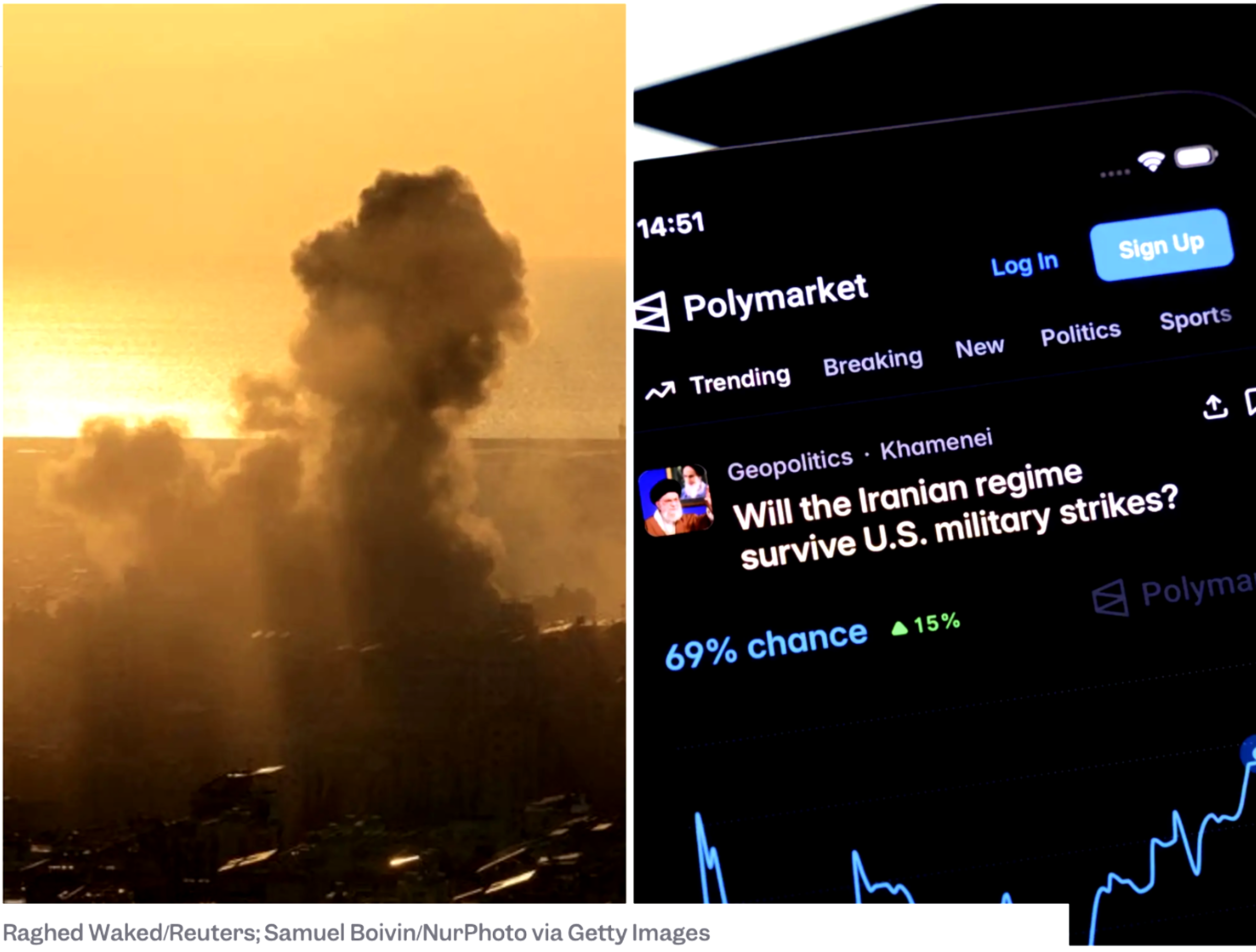
And the scale matters. These are not tiny fringe games. As these platforms grow, they pull more people into a mindset where war becomes something to watch like a chart, something to play, something to win. The emotional distance gets larger. The human reality gets smaller.
This is what feels most corrosive. Prediction markets do not create war. But they can cheapen it. They can turn public tragedy into private opportunity.
Once that happens, the question is no longer only whether people are watching a war.
It is whether they are holding a position in it.